

Essential oils in deodorant: what the label tells you
How to read "fragrance" or "parfum" on an Australian deodorant label, and which essential oils are known skin allergens.
Quick answer
In Australia a deodorant can list its scent as one word, "fragrance" or "parfum", or name each ingredient. Lavender, lemongrass, peppermint, eucalyptus and cedar wood oils are all on an EU safety committee's list of established skin allergens. If fragrance has given you a rash before, pick a label that names every oil and patch test it first.
What "parfum" means on an Australian label
It means the scent is listed as one word and what's in it isn't named.
Under the Consumer Goods (Cosmetics) Information Standard 2020, a fragrance in a cosmetic has to be shown in the ingredient list either as the word "fragrance", "fragrances", "parfum" or "parfums", or as the ingredients that make up the fragrance (Consumer Goods (Cosmetics) Information Standard 2020, section 7(8)).
So "parfum" on its own could be essential oils or synthetic scent. DermNet, the skin information site, says words like "botanical", "herbal" or "natural" on a pack can also mean there's a fragrance in it that isn't named (DermNet, Fragrance allergy).
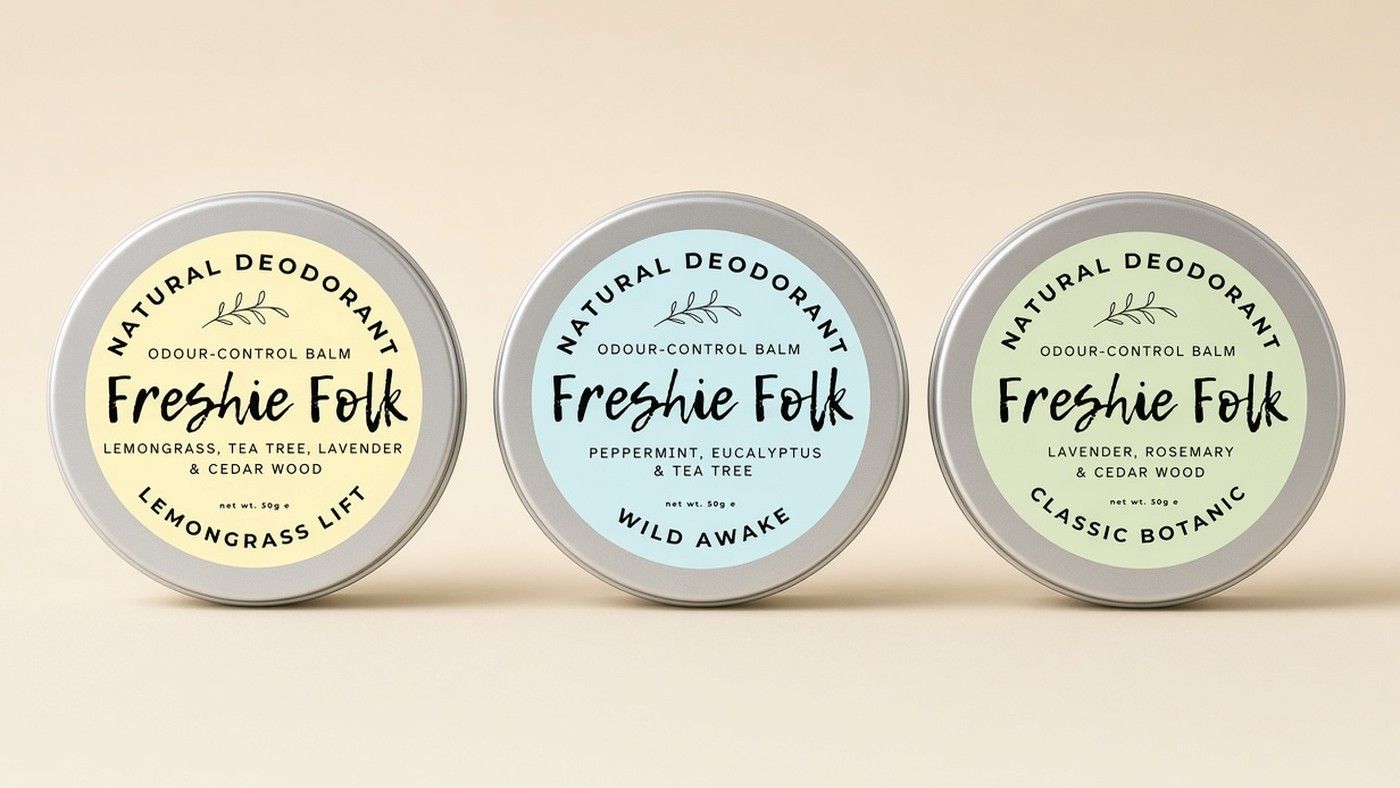
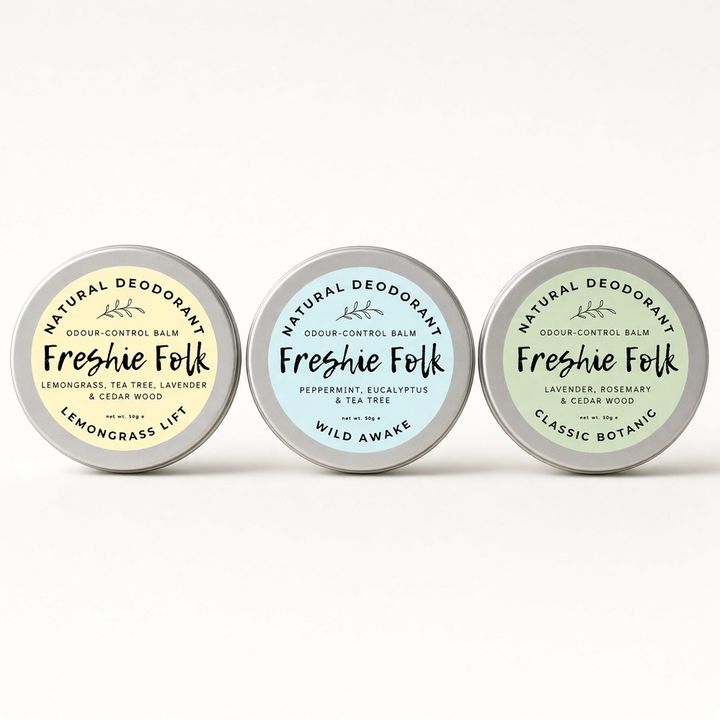
Our labels name each oil. Lemongrass Lift has lemongrass, tea tree, lavender and cedar wood. Wild Awake has peppermint, eucalyptus and tea tree. Classic Botanic has lavender, rosemary and cedar wood. Our scent guide describes how each one smells.
Are essential oils safer than synthetic fragrance?
Not when it comes to allergies. A review by the EU's Scientific Committee on Consumer Safety (SCCS) listed 82 fragrance substances as established contact allergens, and DermNet notes that 28 of them were natural extracts.
Karina wanted fewer synthetic ingredients in her home, and our balms have no synthetic fragrance. The oils in them can still cause an allergy in some people.
The oils in our three balms
We looked up each oil in two EU safety opinions, one on fragrance allergens (SCCS/1459/11, 2012) and one on tea tree oil (SCCP/1155/08, 2008). Every percentage in the table comes from those two documents. The tea tree figures are from the 2008 opinion and the rest are from the 2012 one.
The third column shows the main parts of each oil. The fourth lists anything in the oil that's on the EU's list of 26 fragrance ingredients that have to be named on cosmetic labels there. DermNet has the full list.
| Oil | In | Main parts of the oil | On the EU list of 26 | What the EU opinion says |
|---|---|---|---|---|
| Lemongrass | Lemongrass Lift | Citral, about 75 to 85% of the oil | Citral, geraniol (up to 7%), limonene (up to 4%) | Established contact allergen |
| Lavender | Lemongrass Lift, Classic Botanic | Linalyl acetate (about 25 to 45%) and linalool (about 25 to 38%) | Linalool, limonene, geraniol | Established contact allergen |
| Tea tree | Lemongrass Lift, Wild Awake | Terpinen-4-ol (about 30 to 48%) and gamma-terpinene (about 10 to 28%) | Limonene (0.5 to 1.5%) | Skin sensitiser |
| Cedar wood | Lemongrass Lift, Classic Botanic | Alpha-cedrene (about 22 to 35%) and cedrol (about 16 to 25%) | None in its main components | Established contact allergen |
| Rosemary | Classic Botanic | 1,8-cineole (about 17 to 55%) and alpha-pinene (about 9 to 26%) | None in its main components | A few positive patch tests, too few to call it established |
| Peppermint | Wild Awake | Menthol (up to 49%) and menthone (up to 28%) | Limonene (up to 3%), linalool (up to 0.4%) | Established contact allergen |
| Eucalyptus | Wild Awake | 1,8-cineole (up to 58%) and alpha-pinene (up to 22%) | Limonene (up to 8%) | Established contact allergen |
The percentages are shares of the oil itself. They don't tell you how much oil is in a balm. Where it says "up to", that's the highest amount the 2012 opinion lists for that oil.
Cedar wood oil comes from more than one kind of tree and our label doesn't say which. The EU opinion lists both Virginian and Atlas cedar wood oil as established allergens, and our cedar wood figures are for the Virginian oil.
If you know you react to one of these oils, the table shows which of our balms has it.
Can essential oils in deodorant cause a rash?
Yes. DermNet describes fragrance allergy as allergic contact dermatitis to a fragrance chemical and says it's believed to affect around 1% of adults. It only happens once your skin has been sensitised, and the rash shows up hours to days after contact. The armpits are one of the common spots in both men and women.
The 2008 tea tree opinion says the oil oxidises when it's exposed to air and heat, and the oxidised oil is more likely to cause an allergy than fresh oil.
Our label says "Store below 25°C in a dry place" and "Use within 6 months of opening" (how long deodorant balm lasts).
Stop using any deodorant that gives you a rash, and see a GP if it doesn't settle. A fragrance allergy is confirmed with a patch test.
How do you test a new deodorant for a fragrance allergy?
DermNet describes the repeat open application test: put a dot of the product on the same spot on your forearm or inner upper arm twice a day for two weeks. If a rash comes up, don't use it.
FAQ
Do the essential oils stop the smell?
In our balms the oils are there for scent. The sodium bicarbonate works on odour, and arrowroot and kaolin clay take up a little moisture. Our bicarb vs magnesium deodorant article explains how bicarb works.
Which of your balms has no tea tree or lavender?
Classic Botanic is the only one without tea tree. Wild Awake is the only one without lavender or cedar wood. Lemongrass Lift has tea tree, lavender and cedar wood, plus lemongrass. If you've reacted to one of these oils before, the patch test above is worth doing with the balm you pick.
Is an unscented deodorant fragrance-free?
Not always. DermNet says products labelled "fragrance-free" or "unscented" can still have a masking fragrance to cover the smell of other ingredients, so check the ingredient list.