

Bicarb vs magnesium deodorant: what's the difference?
Bicarb or magnesium deodorant? How each works on odour, why one dissolves 10,000 times more than the other, and how to pick the right one for you.
Quick answer
Bicarb (sodium bicarbonate) and magnesium (usually magnesium hydroxide) both work on underarm odour, and neither stops sweat. The main difference is how much dissolves on your skin. Bicarb dissolves easily. Magnesium hydroxide barely dissolves at all. If bicarb suits you, stay with it. If it leaves you red or itchy, try a magnesium formula.
What is the difference between bicarb and magnesium deodorant?
They are two different mineral powders that do the same job. The difference that matters is solubility: bicarb dissolves readily in the moisture on your skin, and magnesium hydroxide hardly dissolves.
"Magnesium deodorant" on the front of a pack usually means magnesium hydroxide on the back. It's the same compound that, stirred into water, is sold as milk of magnesia. Bicarb is the white powder in the pantry, listed on labels as sodium bicarbonate.
Here are the two side by side, using figures from the US National Library of Medicine's PubChem database for sodium bicarbonate and magnesium hydroxide.
| Sodium bicarbonate (bicarb) | Magnesium hydroxide | |
|---|---|---|
| Other names | Bicarb soda, baking soda | Milk of magnesia (when suspended in water) |
| How much dissolves in 100 mL of water | About 9.6 g at 20°C | About 0.0009 g at 18°C |
| pH | 8.3 (fresh 0.1 molar solution) | 9.5 to 10.5 (wet slurry) |
| Works on odour | Yes | Yes |
| Stops sweat | No | No |
| Where you'll see it | Many balms, pastes and sticks, including ours | Bicarb-free ranges, and some formulas that use both |
How do bicarb and magnesium work on underarm odour?
Both are alkaline, and most underarm odour comes from acids. An alkaline powder reacts with acids, which is the plain chemistry behind using either one.
Fresh sweat from the underarm glands carries odourless compounds. Bacteria that live on the skin there release the smelly molecules from them. A review by fragrance scientists Andreas Natsch and Roger Emter found that the most abundant of these are acids, led by one called 3-hydroxy-3-methyl-hexanoic acid, while the sharpest-smelling are a small group of sulfur compounds (Natsch and Emter, Philosophical Transactions of the Royal Society B, 2020).
Neither powder blocks sweat glands. That's the job of the aluminium salts in antiperspirants, which we cover in aluminium-free deodorant vs antiperspirant. With bicarb or magnesium you still sweat. The aim is that it doesn't smell.
Why does magnesium dissolve so much less than bicarb?
It's the nature of the compound. Magnesium hydroxide is classed as practically insoluble in water, while bicarb dissolves about as easily as sugar does in cold tea.
We put the PubChem numbers next to a figure for skin to show what that means on your body. Skin surface pH comes from a study of 330 people, which estimated that natural skin sits at about pH 4.7 on average, and found that even washing with tap water pushed it higher for up to six hours (Lambers and others, International Journal of Cosmetic Science, 2006).
| Skin surface | Bicarb | Magnesium hydroxide | |
|---|---|---|---|
| pH | About 4.7 | 8.3 | 9.5 to 10.5 |
| pH units above skin | 3.6 | 4.8 to 5.8 | |
| Dissolves in 1 mL of water | About 96 mg | About 0.009 mg | |
| Compared with magnesium hydroxide | About 10,000 times more dissolves |
The bottom two rows are our own calculation from the PubChem figures above, not a lab test.
So magnesium hydroxide is the more alkaline of the two on paper, yet only a trace of it dissolves into the sweat on your skin at any time. Bicarb sits lower on the pH scale but dissolves in quantity. That gap is the likeliest reason some people get on fine with magnesium after bicarb didn't agree with them. It is our reading of the chemistry, and we haven't tested either one on skin ourselves.
Does bicarb deodorant work?
Yes. It has been used as an underarm deodorant for decades, and one of the earliest reports on it is still one of the most useful.
In 1946 an Oklahoma dermatologist, John Henderson Lamb, had 63 senior medical students use plain bicarb under their arms for a month while they were examined each week. All 63 said it worked well as a deodorant, and when asked at the end of the year, 42 were still using it and the other 21 used it now and then. Five noticed some irritation after several weeks (three slight, one chafing and one itch), and two complained of white circles on their brown army shirts (Lamb, Journal of Investigative Dermatology, 1946).
That's an old, small study of dry powder, not a modern trial of a balm. It still shows the pattern most people see today: bicarb works for the large majority, and a minority find it doesn't suit their skin.
Why doesn't bicarb suit everyone?
Bicarb dissolves easily and is alkaline, and an underarm is warm, damp and rubbed by your arm and clothes all day. That mix is where a minority of people notice redness, itching or a sting.
Using a lot more than you need, or putting it on skin you've just shaved, can make it more noticeable. Other ingredients can play a part too. Essential oils, fragrance and preservatives are all worth checking when a deodorant doesn't agree with you, so it isn't always the bicarb.
If any deodorant leaves you red or sore, stop using it and let your skin settle. If it doesn't settle, see a pharmacist or your GP.
Is magnesium deodorant better than bicarb?
Not for everyone. Magnesium is a good option if bicarb hasn't suited you, but if bicarb works for you there is no reason to change.
Some brands sell both, and some mix them. No Pong, for example, lists bicarb in its original formula, magnesium hydroxide with no bicarb in its bicarb-free formula, and magnesium hydroxide with a little bicarb in a third formula (No Pong guide to natural deodorant). So "magnesium" on the front of a pack doesn't always mean there's no bicarb inside. Read the ingredient list.
How do you choose between bicarb and magnesium deodorant?
Start from what your skin has told you so far, then choose a scent you like wearing.
- Bicarb has always been fine for you. Stay with it. A bicarb balm is a simple, familiar choice.
- You've never used a natural deodorant. Either is a reasonable start. A smaller size lets you see how your skin gets on before you buy a full jar.
- Bicarb has left you red or itchy before. Look for a formula with magnesium hydroxide and no sodium bicarbonate. Our balms contain bicarb, so we're not the right pick for you, and the bicarb-free options are listed in our best natural deodorant guide.
- Any irritation that doesn't settle. Stop, and get it looked at by a pharmacist or GP.
If you're coming off an antiperspirant, the first couple of weeks can feel different whichever powder you pick. Our guide to switching to natural deodorant covers what to expect.
How can you tell which one a deodorant uses?
Turn it over and read the ingredient list. Look for "sodium bicarbonate" or "magnesium hydroxide" by name.
Ingredient lists use standard names, so the front of the pack might say "bicarb soda" or "baking soda", but the back will say sodium bicarbonate. A few other things are worth knowing when you read one:
- Arrowroot, corn starch, tapioca and kaolin clay absorb a little moisture. They help, but they aren't the odour ingredient.
- Both can appear together. Some magnesium formulas also include a little bicarb.
- "Fragrance" or "parfum" can stand for many ingredients. Named essential oils tell you exactly what gives the scent.
What's in Freshie Folk balms?
Our balms use sodium bicarbonate for odour, with arrowroot and kaolin clay to absorb a little moisture. Bicarb is the third ingredient on the jar, after shea butter and arrowroot powder.
Here is the full list for every balm: shea butter, arrowroot powder, sodium bicarbonate, coconut oil, kaolin clay, cold pressed sunflower oil (high oleic), beeswax, vitamin E oil and a pure essential oil blend. Karina makes them in Freshwater, Sydney, and every ingredient is named on the label.
What we leave out matters as much. There are no aluminium salts, parabens, synthetic fragrance, phthalates, propylene glycol, triclosan or talc in our balms. The scent comes only from essential oils, and the blend is the only thing that changes between them:
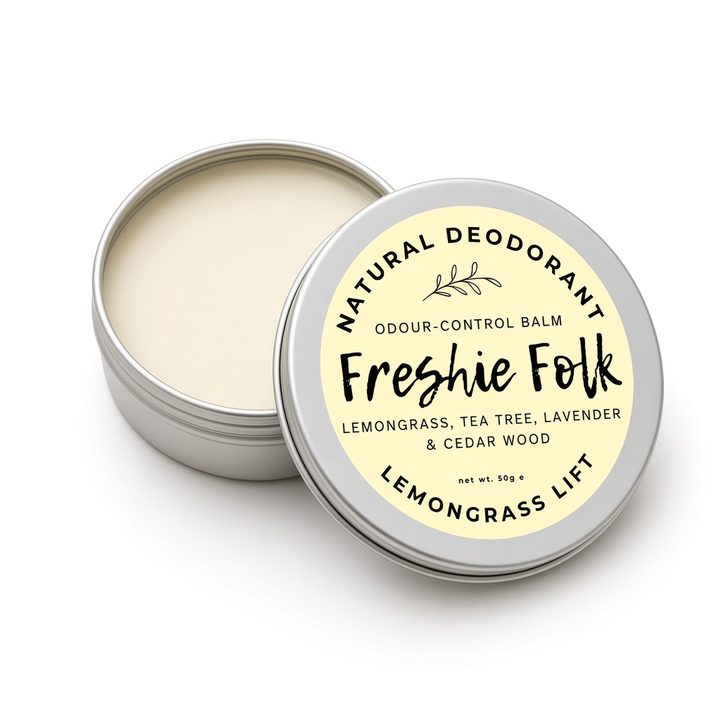
- Lemongrass Lift smells of lemongrass and tea tree first, with lavender and cedar wood underneath.
- Classic Botanic is rosemary and lavender with cedar wood, and smells herby and soft.
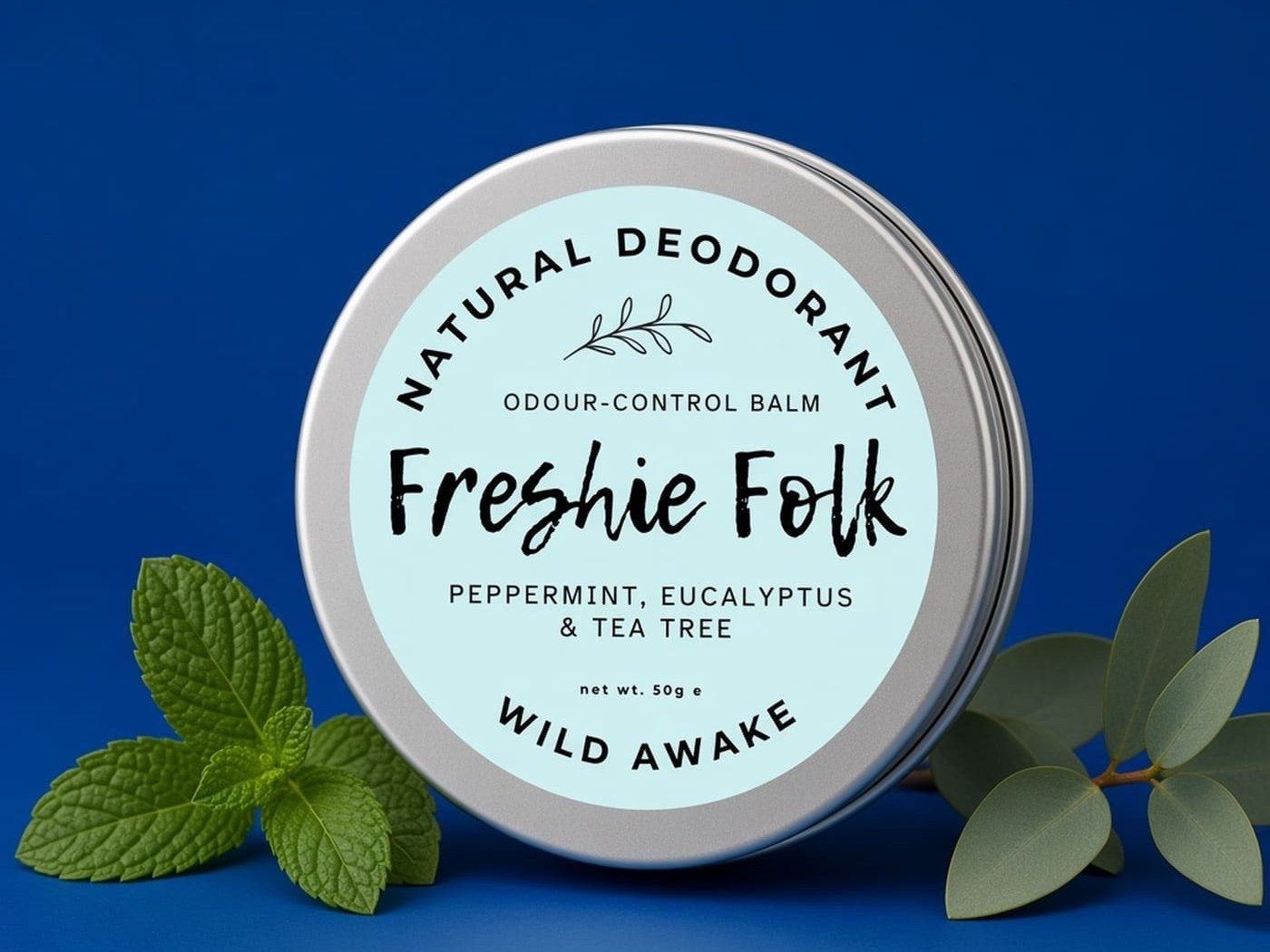
- Wild Awake is the minty one: peppermint up front, then eucalyptus and tea tree.
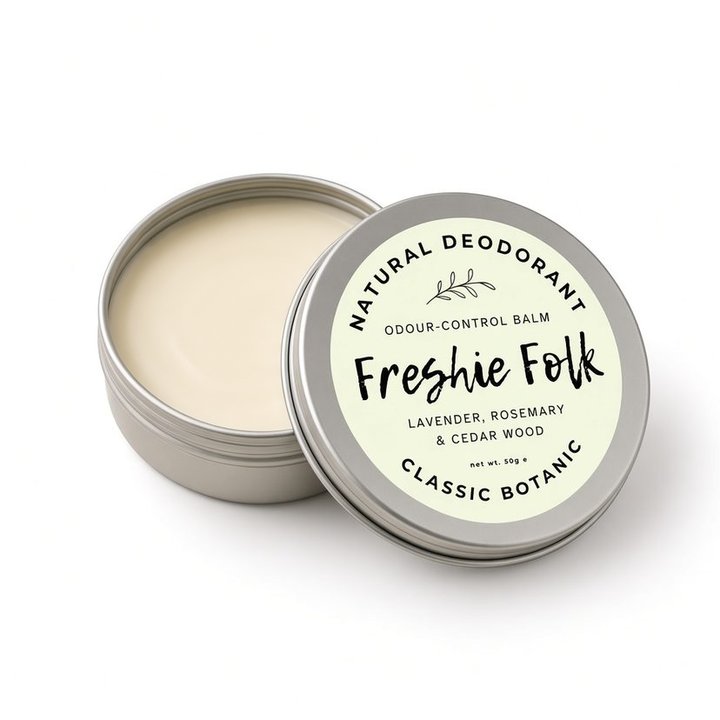
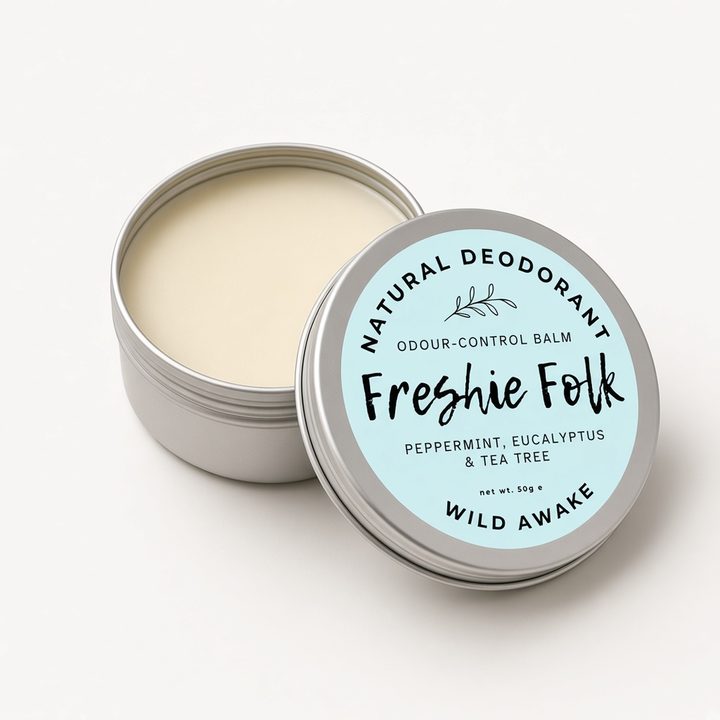
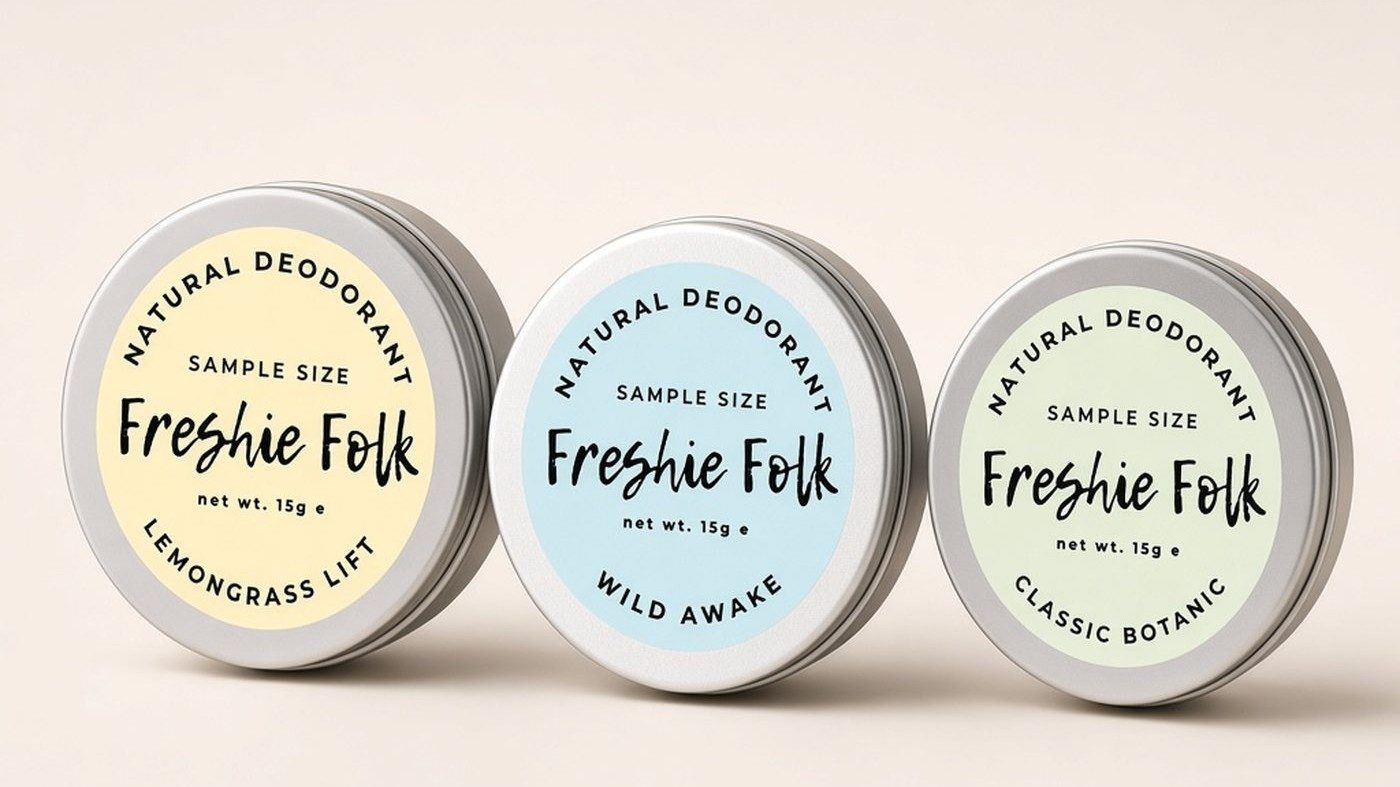
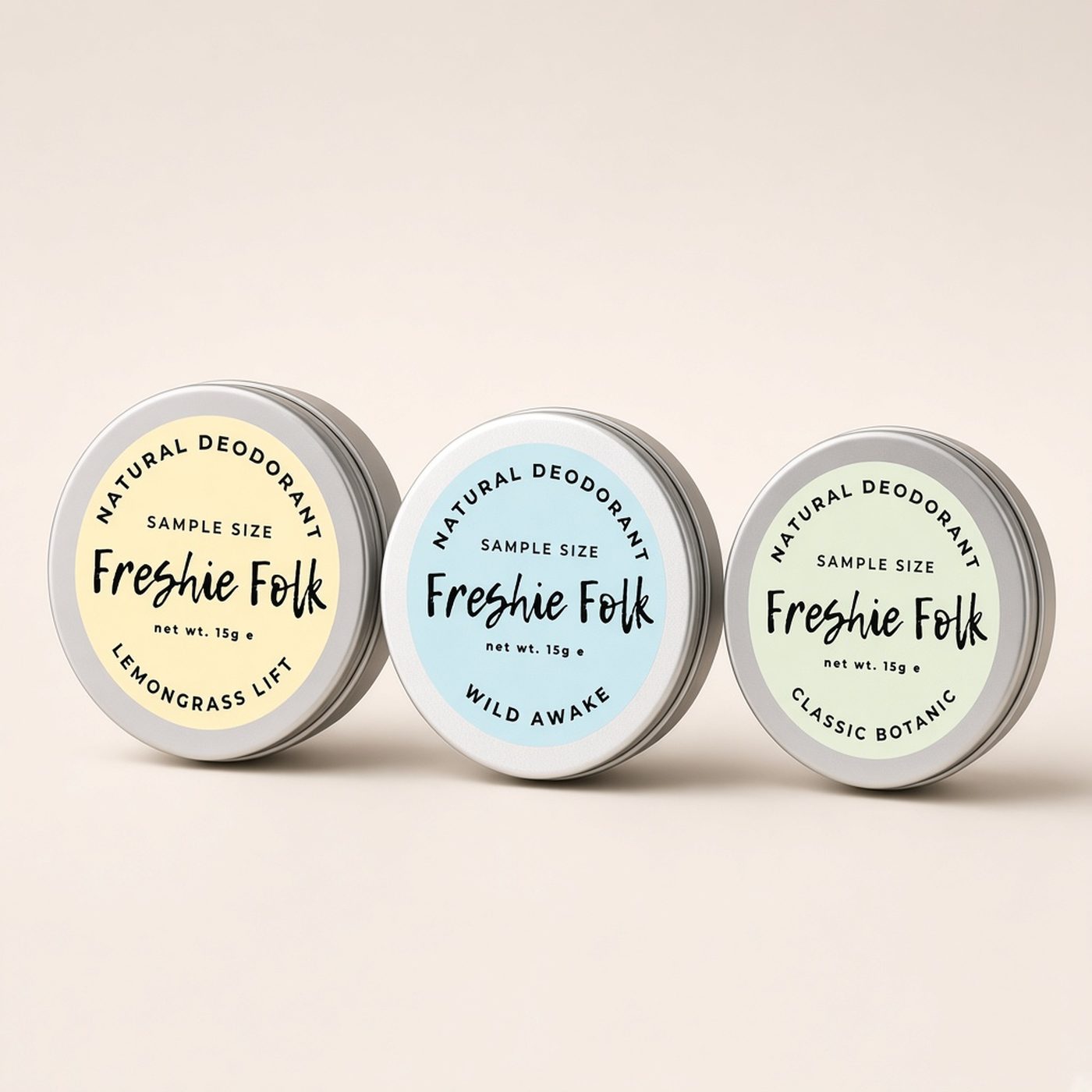
Not sure which scent is yours? The Scent Sampler Bundle has a 15 g sample of all three, which is also a low-key way to see how your skin gets on with bicarb.
FAQ
Does magnesium deodorant stop you sweating?
No. Magnesium hydroxide works on odour, like bicarb. Only an antiperspirant, which uses aluminium salts, reduces sweat.
Is baking soda the same as bicarb soda?
Yes. Baking soda, bicarb soda and sodium bicarbonate are the same compound. Ingredient lists use the name sodium bicarbonate.
Can a deodorant have both bicarb and magnesium?
Yes. Some brands combine a little bicarb with magnesium hydroxide. If you're avoiding bicarb, check the full ingredient list rather than the front of the pack.
Do Freshie Folk balms contain magnesium?
No. All three of our balms use sodium bicarbonate. If bicarb doesn't suit your skin, a magnesium hydroxide formula from another brand is a better place to start.
Why does bicarb deodorant leave white marks?
Bicarb, arrowroot and clay are white powders, so too much product can leave a light residue on dark fabric. Even the 1946 bicarb study had two students complain about it. A smaller amount and a minute to let it settle before you dress usually sorts it.