

Aluminum-free deodorant vs antiperspirant: what each one does
Antiperspirants use aluminum salts to reduce sweat. Deodorants work on odor. Here is the honest difference, and whether an aluminum-free antiperspirant exists.
Quick answer
An antiperspirant reduces sweat, and it does that with aluminum salts. A deodorant works on odor and lets you sweat as normal. So a true "aluminum-free antiperspirant" is rare: most products sold under that name are aluminum-free deodorants. If staying dry is what you need, an antiperspirant is the product for that. If you mainly want to manage odor, a deodorant does that job.
What's the difference between deodorant and antiperspirant?
An antiperspirant reduces how much you sweat. A deodorant works on odor and doesn't change how much you sweat.
| Antiperspirant | Aluminum-free deodorant | |
|---|---|---|
| Main job | Reduces sweat | Works on odor |
| Typical active | Aluminum salts, such as aluminum chlorohydrate or aluminum zirconium | Odor-control ingredients such as sodium bicarbonate, magnesium hydroxide or zinc, plus scent |
| How it works | Aluminum compounds temporarily block the sweat ducts | Works on the odor that forms when skin bacteria break down sweat |
| What you notice | Drier underarms | You sweat as normal, with less odor |
| Where to check | "Antiperspirant" on the front, aluminum in the ingredients | No aluminum compounds in the ingredients |
Cancer Australia describes antiperspirants as a type of deodorant that prevent sweating by blocking the sweat glands, often with aluminum-based compounds (Cancer Australia). Many products on the shelf are both: an "antiperspirant deodorant" reduces sweat and adds fragrance.
Is there such a thing as an aluminum-free antiperspirant?
Not really. Aluminum salts are what make an antiperspirant work, so when a product drops them it becomes a deodorant.
You'll see "natural antiperspirant" and "aluminum-free antiperspirant" in search results and on some packs. Read the ingredient list. If there's no aluminum compound, it's working on odor, not stopping sweat. That isn't a flaw, it's just a different job. We'd rather say so plainly than let a name do the work.
Watch for alum too. Crystal deodorants made from potassium alum or ammonium alum are often sold as natural, but alum is an aluminum compound.
Why do people choose aluminum-free deodorant?
For personal reasons. Some people prefer a short ingredient list they can read. Some don't mind sweating and only care about odor. Some like the feel of a balm, or the scents.
You may have read claims that aluminum in antiperspirants causes cancer. Cancer Council Australia says there is no evidence that deodorants or antiperspirants cause cancer (Cancer Council). We don't claim otherwise. Going aluminum-free is a preference, not a health choice.
Which one should you use?
Pick the job you want done.
- You want to stay dry (big presentations, a hot commute, a shirt that shows marks): an antiperspirant reduces sweat, and a natural deodorant won't.
- You mainly care about odor: a deodorant works on odor, and you sweat as normal.
- You want both on different days: plenty of people use an antiperspirant for a big day and a deodorant the rest of the time.
If you're moving from antiperspirant to deodorant, the first week or two can feel damper while you get used to sweating as normal. Our week-by-week switching guide covers what to expect.
What's in an aluminum-free deodorant balm?
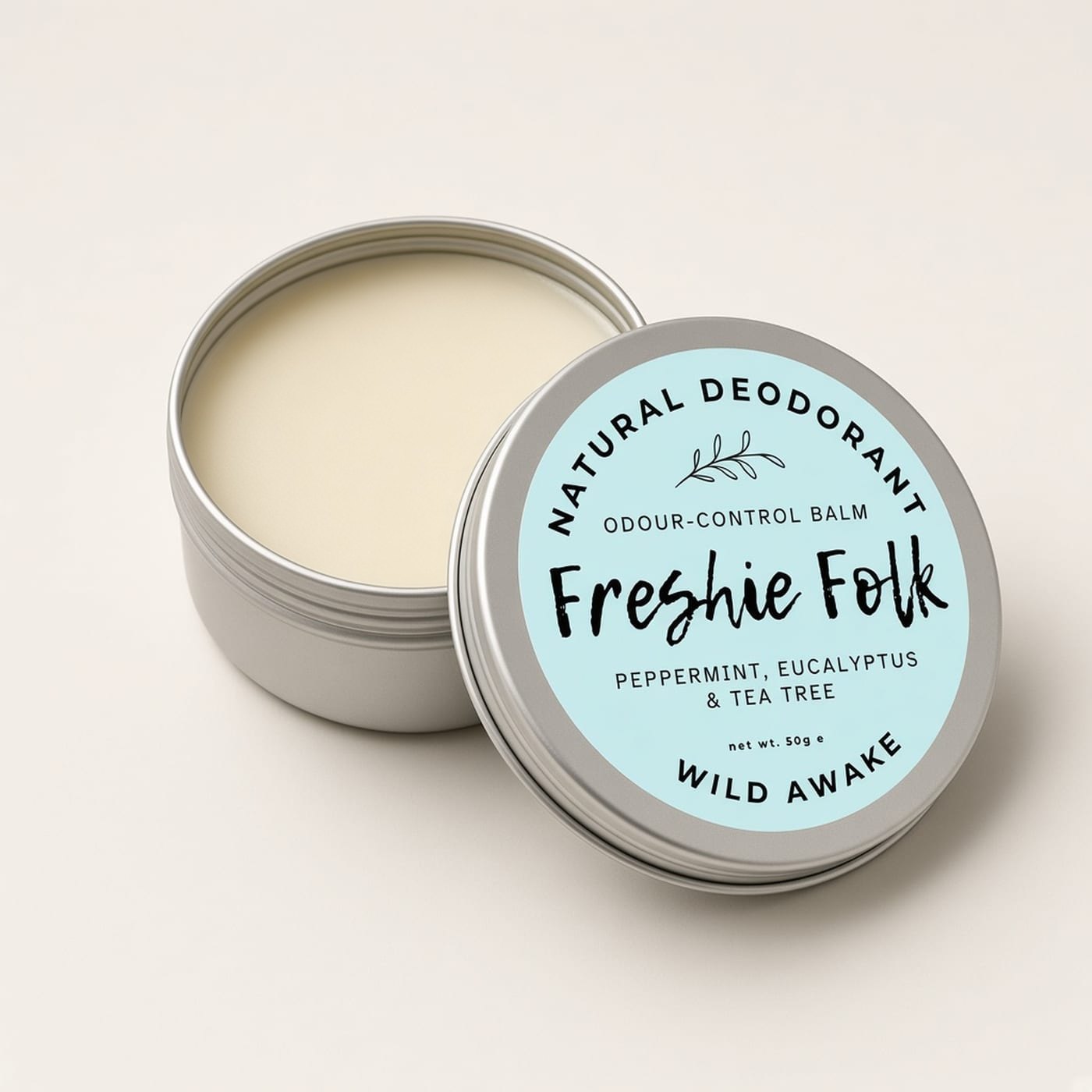
Butters, oils, wax, powders, an odor-control ingredient and essential oils. Here is our Wild Awake balm, as printed on the label:
Shea butter, arrowroot powder, sodium bicarbonate, coconut oil, kaolin clay, cold pressed sunflower oil (high oleic), beeswax, vitamin E oil, pure essential oil blend (peppermint, eucalyptus, tea tree).
- Odor: sodium bicarbonate.
- Texture: arrowroot powder and kaolin clay give the balm its smooth, dry-feeling finish. They don't stop sweat.
- Skin feel: shea butter, coconut oil, sunflower oil and vitamin E oil.
- Structure: beeswax holds the balm together.
- Scent: pure essential oils, all named.
How do you read a deodorant label?
Look for aluminum first, then the odor ingredient, then the scent.
- Check for aluminum. Aluminum chlorohydrate, aluminum zirconium tetrachlorohydrex gly and alum are antiperspirant actives.
- Find the odor ingredient. Bicarb, magnesium hydroxide, zinc ricinoleate or similar.
- Check the scent. Named essential oils, "fragrance" or "parfum", or unscented.
- Patch test. Try a small amount on the inside of your arm first, especially with bicarb.
FAQ
Does aluminum-free deodorant stop sweat?
No. Only antiperspirants reduce sweat. An aluminum-free deodorant works on odor, and you sweat as normal.
Is there an aluminum-free antiperspirant?
Very rarely. Aluminum salts are what make an antiperspirant reduce sweat, so most products labelled "aluminum-free antiperspirant" are deodorants. Check the ingredient list.
What is the difference between deodorant and antiperspirant?
An antiperspirant reduces sweat, usually with aluminum salts. A deodorant works on odor and lets you sweat as normal.
Is alum crystal deodorant aluminum-free?
No. Potassium alum and ammonium alum are aluminum compounds, even when sold as a mineral or natural deodorant.
Do antiperspirants cause cancer?
Cancer Council Australia says there is no evidence that deodorants or antiperspirants cause cancer.
Are Freshie Folk balms deodorants or antiperspirants?
Deodorants. Lemongrass Lift, Wild Awake and Classic Botanic are made without aluminum. They work on odor and don't stop sweat.