

Deodorant balm melting in the heat? Why it happens and what to do
Why a natural deodorant balm softens or melts in summer, how to firm it up again and where to keep it cool.
Quick answer
Yes, a natural deodorant balm can melt. Coconut oil, one of its fats, turns liquid at about 24°C, so a balm softens on a warm day and goes runny in a parked car. It isn't ruined. Keep the lid on, stand it upright in the fridge until firm, then store it below 25°C, away from sun and steam.
Why does deodorant balm melt in the heat?
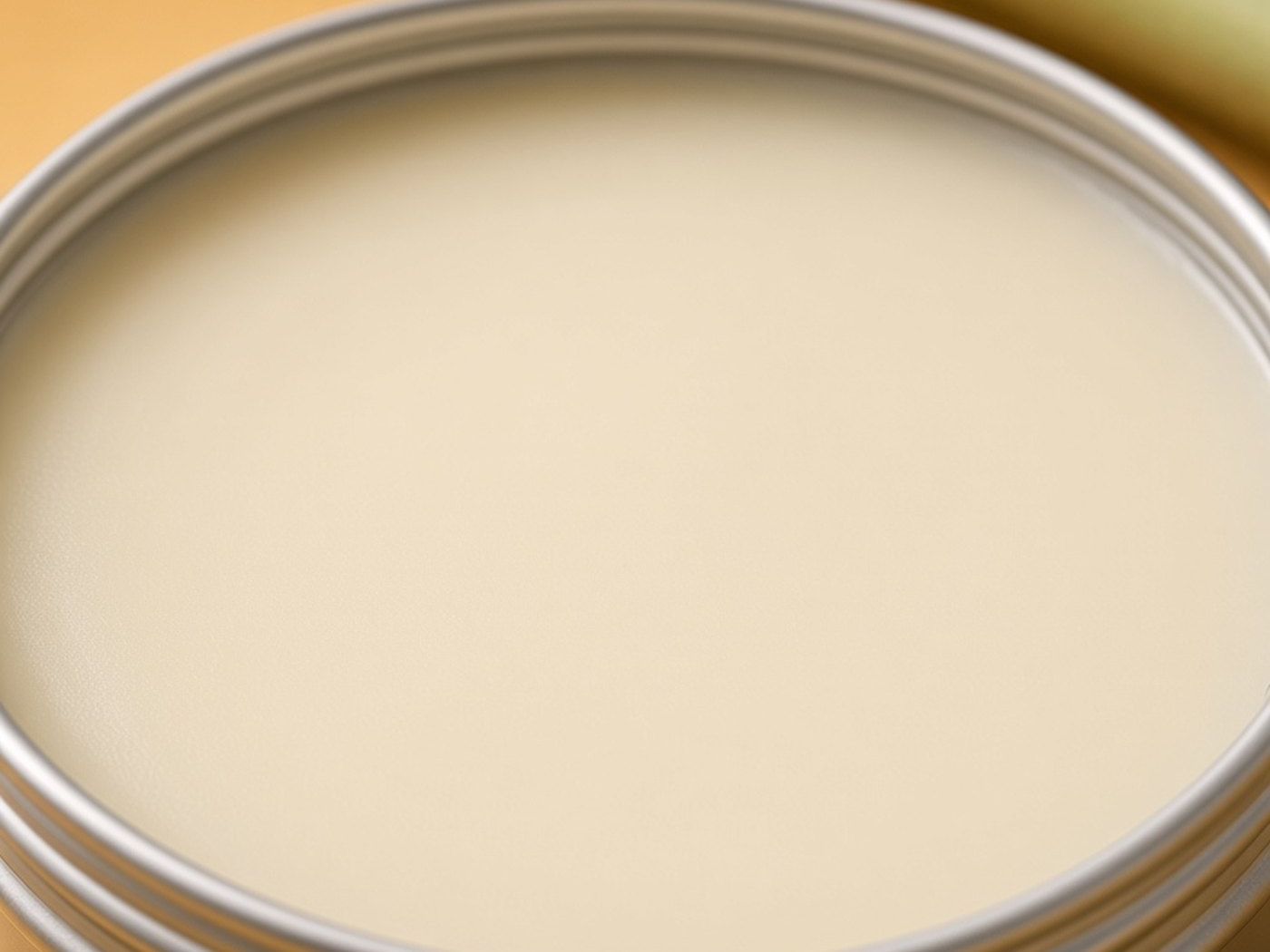
A balm melts because it is held together by plant fats that turn liquid at everyday summer temperatures. The softest of them, coconut oil, melts at around 24°C, so a balm starts to slacken well before a day feels hot.
There is no synthetic hardener in our balms. Karina mixes each batch by hand in Sydney from a short list of butters, oils, wax and powders, and every one of them is named on the label. That base is chosen to melt on contact with skin, which is exactly why it also responds to a sunny windowsill.
The numbers behind it are well measured. In a lab study, coconut oil had a peak melting point of 24.5°C (plus or minus 1.5°C), and a bulk sample began melting at about 21°C and was fully liquid by about 27°C (Kahwaji and White, Applied Sciences, 2019). Shea butter needs more warmth: in one calorimetry study it began melting at 32°C and peaked at 39°C (Medwin Publishers, shea butter study), and AAK, a large shea supplier, notes that traditional shea is completely melted above 40°C (AAK technical paper, PDF). Beeswax holds out longest, with an official melting range of 62 to 65°C (FAO/JECFA beeswax specification, PDF).
What happens to each ingredient as it warms up?
Each ingredient on our label reacts to heat differently. The fats soften in stages, the powders never melt at all, and the bicarb is the one to protect from real heat.
Here is the full list from our label, in label order, with what warmth does to each one.
| Ingredient (label order) | What heat does to it | Source |
|---|---|---|
| Shea butter | Starts melting around 32°C, fully liquid above about 40°C | Medwin; AAK |
| Arrowroot powder | Doesn't melt. Can sink if the fats around it turn liquid | Physical property |
| Sodium bicarbonate | Doesn't melt. Starts to break down above about 50°C | ICSC 1044 |
| Coconut oil | Melts at about 24°C, the first fat to go | Kahwaji and White |
| Kaolin clay | Doesn't melt. Can settle like arrowroot | Physical property |
| Cold pressed sunflower oil (high oleic) | Already liquid at room temperature | Physical property |
| Beeswax | Melts at 62 to 65°C | FAO/JECFA |
| Vitamin E oil | Already liquid at room temperature | Physical property |
| Essential oils | Already liquid at room temperature | Physical property |
Put together, that gives four rough stages. These are our reading of the figures above, not a lab test of our own balm:
- Below about 22°C: firm. You may need to warm a scoop on your fingertips a little longer.
- About 24 to 30°C: soft and glossy as the coconut oil gives way. Still usable, just spreadier.
- About 32 to 40°C: the shea melts too, and the balm turns into a thick oil with the powders slowly settling.
- Above about 50°C: the bicarb starts to change, and by 62°C even the beeswax has melted. This is hot-car territory.
Why does our label say to store it below 25°C?
Because that is about where coconut oil lets go. Karina's label reads "Store below 25°C in a dry place", and the line sits right on the melting point measured for coconut oil.
The same label also says "Allow the paste to melt into skin before dressing." The low melting point is a feature, not a flaw: a fat that softens at 24 to 25°C melts readily on skin that sits well above that. The trade-off is that a sunny shelf, a steamy bathroom or a glovebox can reach that point too.
How hot does it get in Australian cities in summer?
Hot enough, in most capitals, for the average afternoon to pass 25°C for several months of the year. In Darwin it is above that line every month.
We pulled the long-term mean maximum temperature for each capital from the Bureau of Meteorology and counted the months that average above 25°C, the storage line on our label. The months column is our own count from BoM's figures.
| City (BoM station) | Nov | Dec | Jan | Feb | Months a year averaging over 25°C |
|---|---|---|---|---|---|
| Darwin (Airport) | 33.4°C | 32.8°C | 31.8°C | 31.5°C | 12 |
| Brisbane | 28.4°C | 29.7°C | 30.4°C | 30.2°C | 8 |
| Perth (Metro) | 26.8°C | 29.6°C | 31.4°C | 31.7°C | 6 |
| Adelaide (West Terrace) | 24.4°C | 26.9°C | 28.7°C | 28.6°C | 4 |
| Canberra (Airport) | 24.9°C | 27.4°C | 30.0°C | 28.1°C | 4 |
| Sydney (Observatory Hill) | 23.7°C | 25.3°C | 26.0°C | 25.8°C | 3 |
| Melbourne (Olympic Park) | 22.2°C | 24.7°C | 26.8°C | 25.9°C | 2 |
| Hobart (Ellerslie Road) | 18.8°C | 20.4°C | 21.8°C | 21.8°C | 0 |
Figures are BoM mean daily maximums for each station's full record, checked 5 Nov 2026. They are outdoor shade temperatures and averages, so heatwave days run well above them. Indoors, a drawer in an air-conditioned room may never get there, while a west-facing windowsill or a bathroom straight after a hot shower can pass them easily.
Can you leave deodorant balm in a hot car?
Please don't. A closed car in the sun climbs far above the outside temperature within minutes, which is enough to melt every fat in a balm except, on milder days, the beeswax.
A study in the journal Pediatrics measured a dark sedan on clear days between 22 and 36°C outside. On average the inside rose about 22°C (40°F) in an hour, with 80 percent of that rise in the first 30 minutes, and even on the coolest day the cabin reached 47°C (McLaren, Null and Quinn, Pediatrics, 2005). Cracking the windows made no real difference.
Apply that average rise to the table above and a parked car on a typical January afternoon in Brisbane (30.4°C) would sit somewhere around 52°C after an hour. That is our rough estimate, not a measurement, but it puts the cabin past the point where shea is fully liquid and past the 50°C mark where bicarb starts to break down.
What should you do if your deodorant balm has melted?
Leave the lid on, keep it upright, and cool it down in the fridge. Most melted balms set again with nothing lost but a little time.
- Don't open it while it's runny. A liquid balm spills the moment you twist the lid. Stand it upright on a flat shelf first.
- Move it somewhere cool. The fridge is quickest. For scale, the coconut oil study above found 15 mL of melted coconut oil took about two hours to set at a room temperature of 21.5°C, so a cupboard on a warm day may not do it.
- Stir once as it thickens. When it turns from oil to a soft paste, give it one stir with a clean applicator so the arrowroot, kaolin and bicarb don't stay sunk at the bottom. Chagrin Valley, a US maker of balm deodorants, gives the same advice for the same reason (Chagrin Valley, melting FAQ).
- Let it set fully, then return it to a cool cupboard. It doesn't need to live in the fridge once it's firm.
- Check it before you use it. A sour or stale smell, spotting or a colour shift means it's time for a fresh jar. How long an opened balm keeps is covered in our guide to how long deodorant balm lasts.

Why is my balm grainy after it melted?
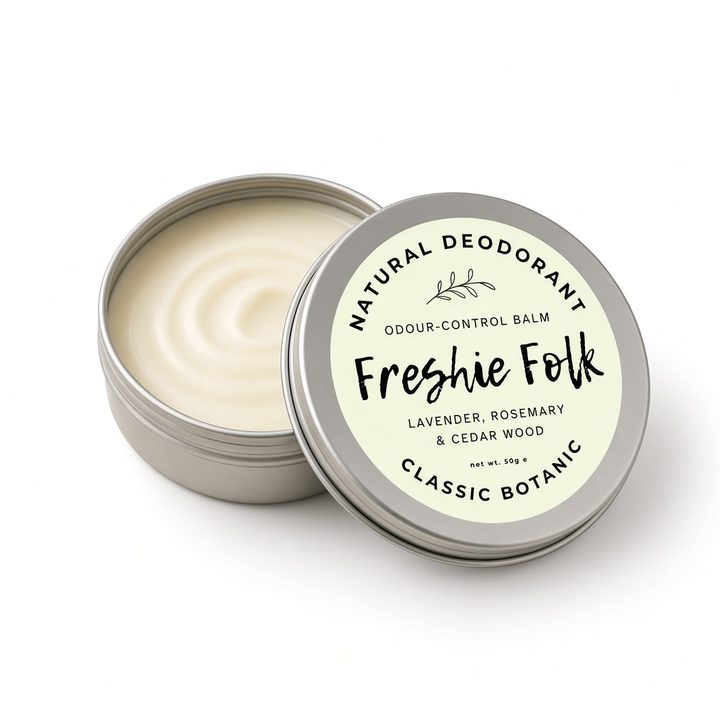
Graininess is shea butter setting into larger crystals after a slow cool. The grains are fat, not grit, and they soften as you warm a scoop.
AAK explains that when shea cools slowly it forms fewer, larger crystals that you can see and feel, while fast cooling gives many small ones and a smooth finish (AAK, grainy shea butter). That is why the fridge step matters: cooling a melted balm quickly gives the shea less time to grow those crystals.
If your balm is already grainy, you have two choices:
- Use it as it is. Hold the scoop between your fingertips a few seconds longer than usual so the grains soften before it touches your underarm. Our guide to applying deodorant balm shows the warming step.
- Cool it faster next time. If it softens again on a hot day, put it straight in the fridge rather than letting it set slowly on the bench.
Many online guides suggest re-melting a grainy balm in a microwave or a pot of simmering water. We don't suggest that for ours. The bicarb in it starts to break down above about 50°C, and we haven't tested a full home re-melt of our balm, so we can't tell you how it would turn out.
How should you store deodorant balm in an Australian summer?
Somewhere cool, dry and dark, with the lid on. Think bedroom drawer or linen cupboard, not windowsill, car or shower ledge.
The US Food and Drug Administration says temperature changes, sunlight and air can change the colour, texture and smell of cosmetics, and warns against leaving them somewhere hot such as a car (FDA, shelf life of cosmetics). For a balm, a few habits cover it:
- Keep it out of the bathroom on hot days. Steam and warmth together soften it fastest.
- Pick an inside wall. A cupboard away from west-facing windows stays cooler through the afternoon.
- Use the fridge if your home runs hot. It's fine to keep a balm there through a heatwave. Take it out a few minutes before you need it, as a cold balm is firm.
- Close the lid every time. It keeps out moisture and stops a soft balm spilling if the jar tips.
What about beach bags, gym bags and travel?
Carry a small amount and keep it in the shade. A bag on the sand or a car boot heats up much like a closed car.
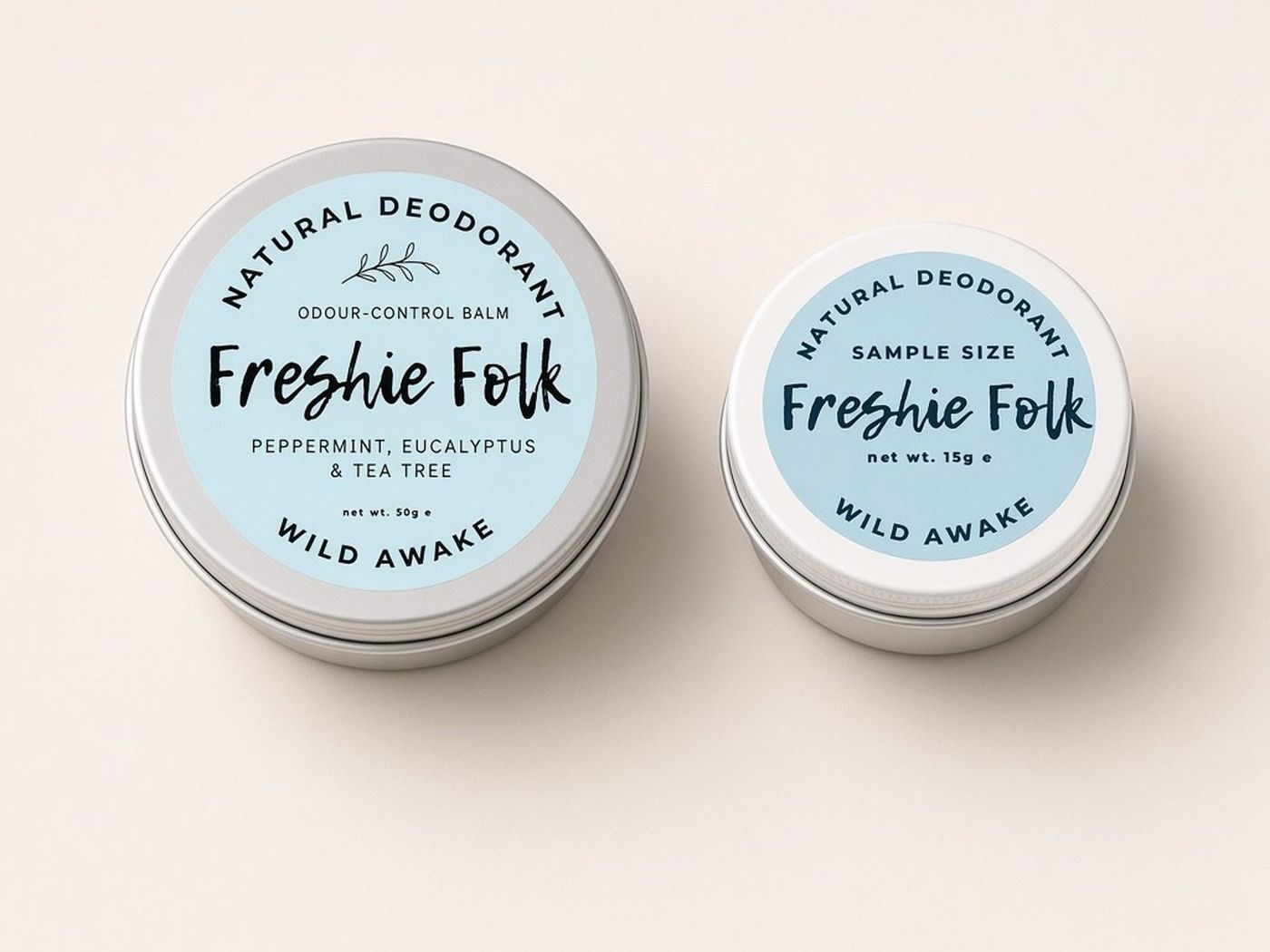
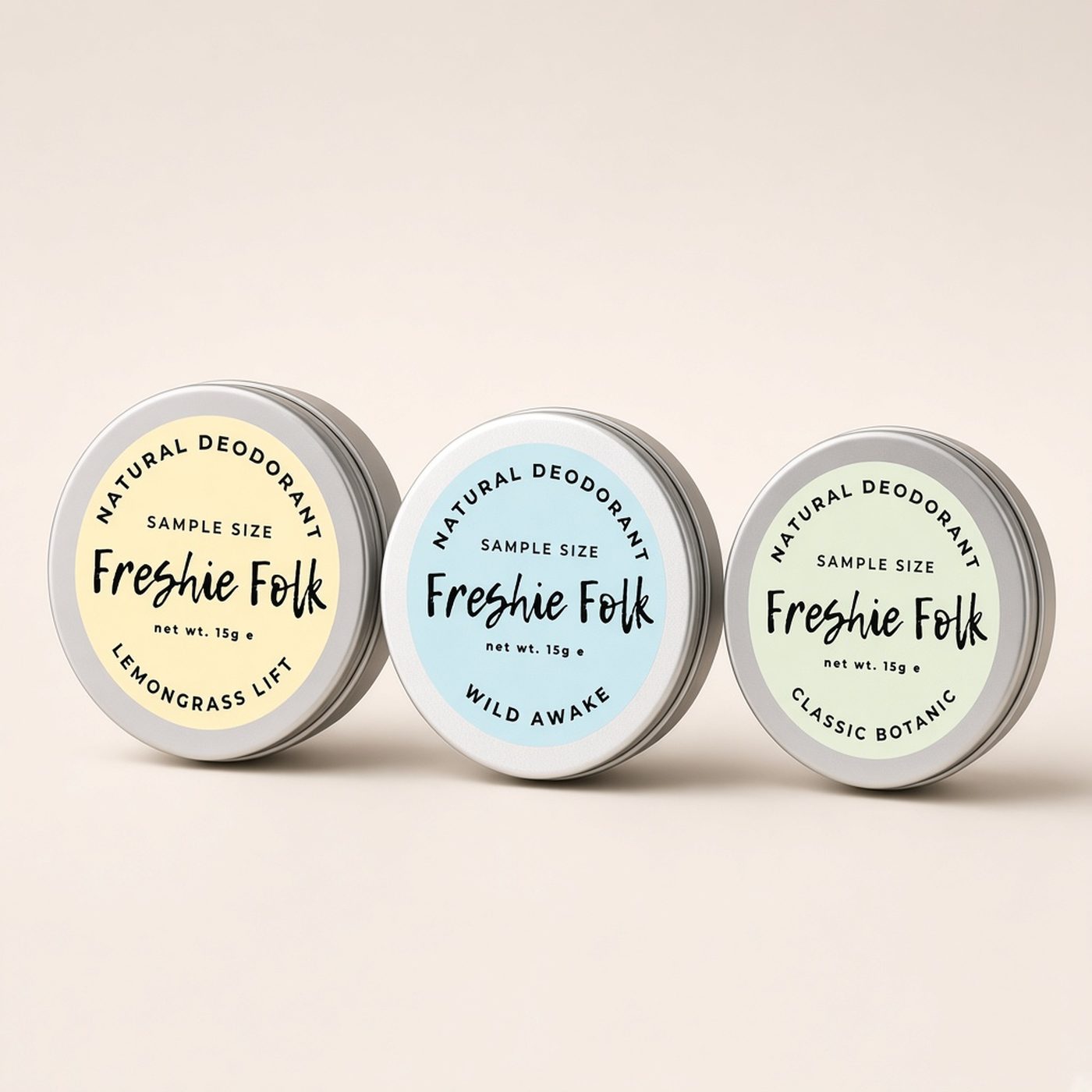
A smaller jar is easier to manage on the move. Our sample size balms hold 15 g each, so a softened jar is less to lose and quick to firm up again in a fridge at the other end. Pack it in the middle of your bag rather than an outside pocket, or in a small insulated lunch pouch on hot days.
Does melting change how a balm works?
A balm that softened in a warm room and set again is made of the same ingredients and goes on the same way. Very high heat is different, because it can change the bicarb.
Melting and setting is a physical change: the fats go liquid and then solid again. The exception is a jar that has sat in serious heat, such as a parked car on a summer day. Above about 50°C, sodium bicarbonate begins to lose carbon dioxide and turn into sodium carbonate (PubChem, sodium bicarbonate), so a balm cooked that hot may not behave as it did. If it smells, looks or feels clearly different once it has set, replace it.
FAQ
Can I put deodorant balm in the fridge?
Yes. The fridge is the quickest way to firm up a soft or melted balm, and it's fine to keep one there through a heatwave. Give it a few minutes at room temperature before you scoop, or warm the scoop a little longer on your fingertips.
Should I use the freezer instead?
The fridge is enough. Some makers suggest a few minutes in the freezer, but a frozen balm is very hard to scoop, and you'll be waiting for it to soften again before you can use it.
Why is there a layer of oil on top of my balm?
The liquid oils in the balm, such as sunflower oil and melted coconut oil, can rise while the powders sink. Once it has firmed up a little in the fridge, stir it once with a clean applicator and let it set fully.
Will my order arrive melted in summer?
It can soften in transit on a very hot day, like any butter-based balm. We pack orders within 1 to 3 business days, and delivery inside Australia usually takes 3 to 10 days in total. If the parcel feels warm when it arrives, put the balm in the fridge before you open the lid.
Do deodorant sticks melt less than balms?
Usually, yes. Sticks need more wax to hold their shape, so they cope a little better with heat; Chagrin Valley says the same of its own sticks in the melting FAQ linked above. The trade-offs between formats are in the format table of our best natural deodorant guide.
Why is my balm hard in winter?
Below about 22°C the coconut oil is solid, so the balm firms up. Scoop a small amount with the Bamboo Applicator and hold it between your fingertips for a few seconds until it softens.